
PRP in Medellín | Platelet-Rich Plasma Therapy
Autologous regenerative treatment for joints, hair, and skin. Personalised medical assessment, clear protocols, and real follow-up.
What is PRP therapy?
PRP — Platelet-Rich Plasma — is a regenerative treatment made from the patient's own blood. Through centrifugation, platelets are concentrated. These platelets contain key growth factors that support tissue repair. The concentrate is then applied directly to the treatment area.
Because PRP comes from your own blood, allergic reactions are uncommon. It is still an injection: it can cause pain, swelling or bruising for a few days and, rarely, infection.
At YouMedicine, PRP is used as a standalone therapy or combined with exosomes or stem cells, depending on the patient's clinical goals and prior medical assessment.
What is PRP used for?
PRP has clinical applications across different areas of the body. Its use always depends on a prior medical assessment.
Joints & orthopaedics
For knees, shoulders, and hips with mild-to-moderate osteoarthritis or soft tissue injuries. PRP supports inflammation reduction and the joint environment.
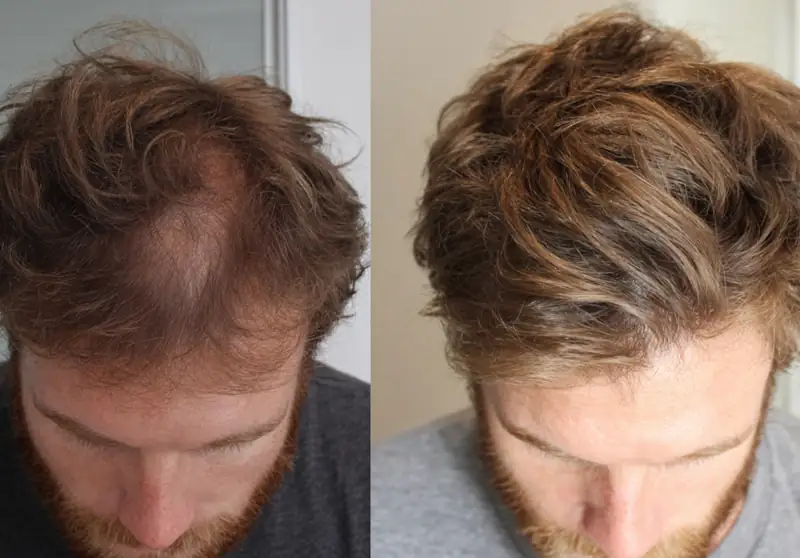
Hair & scalp
For early-stage androgenetic alopecia. PRP supports follicle activity. A typical protocol includes 3–4 initial sessions followed by maintenance.
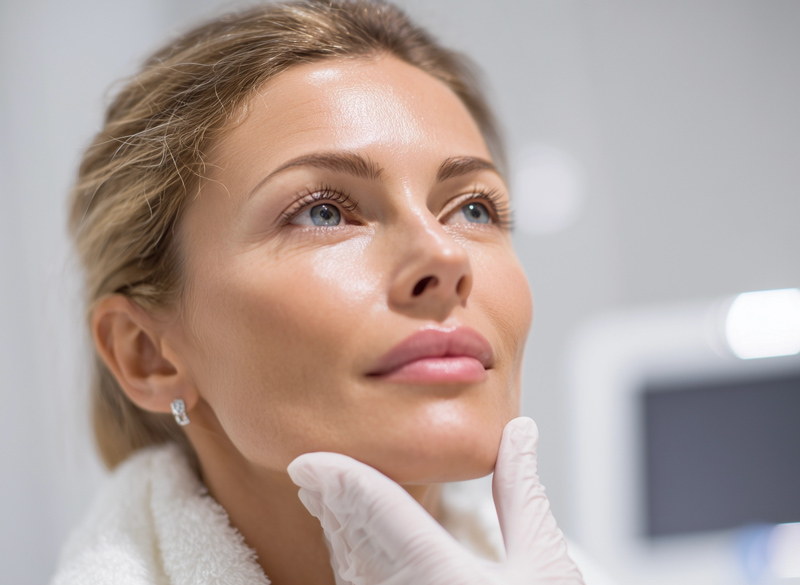
Skin & facial rejuvenation
Applied with microneedling, PRP can support improvements in skin texture, tone, and overall quality. Results develop gradually over weeks to months.
Sports injuries
Tendons, ligaments, and muscle injuries. PRP is frequently considered as a non-surgical option for slow-recovering injuries.
Post-procedure recovery
PRP is frequently combined with other regenerative therapies like stem cells or exosomes to support the overall recovery process.
Scarring & skin quality
In some aesthetic protocols, PRP supports collagen remodelling and may improve the appearance of scars or sun-damaged skin.
How does the procedure work?
The complete procedure is performed in the same session and does not require hospitalisation.
Blood draw
A small amount of blood is drawn from the arm — the same as a routine blood test.
Centrifugation
The sample is processed for 10–15 minutes to separate and concentrate the platelets.
PRP preparation
The concentrated platelet-rich plasma with growth factors is obtained, ready for application.
Application
The PRP is injected or applied via microneedling to the treatment area (joint, scalp, or skin).
Follow-up
A review is scheduled to assess the response and adjust the protocol if needed.
Duration: 45–75 minutes per session. No hospitalisation. Most patients resume light activities the same day.
Realistic results and timeline
PRP does not produce immediate results. Growth factors trigger biological processes that take time. This is normal and expected — not a sign the treatment isn't working.
Most patients notice initial changes between 2 and 6 weeks after the first session. Fuller results are typically seen between 1 and 3 months, and continue evolving over several more months.
Results vary depending on the area treated, age, starting condition, and individual factors. No outcome is guaranteed. Your doctor will give you a specific estimate for your case.
Request a personalized quote
Your plan and costs depend on your medical evaluation. Contact us on WhatsApp or through the consultation form for a personalized quote.
Our team prepares each quote according to the medical evaluation and recommended protocol.
Why choose YouMedicine for PRP?
Real prior medical assessment — we do not start any treatment without reviewing your history and goals
Individualised protocols — the number of sessions, area, and treatment combinations are tailored to your case
Clinic in El Poblado — Medellín's medical and residential district, with easy access for international patients
Communication in English and Spanish — the team works with international patients routinely
Structured follow-up — your process does not end when you leave the clinic
No exaggerated promises — we tell you what to expect and what not to, honestly
Platelet-rich plasma in Medellín: what the evidence says
PRP does not work the same way for every problem. The quality of research varies a lot by body area and diagnosis, so during your evaluation we explain where your case fits before suggesting any session.
PRP preparations also differ: platelet concentration, whether white cells are included and volume vary between systems. That variety explains some of the differences between studies, and it is worth asking any clinic how they prepare it.
Mild to moderate knee osteoarthritis: the most studied use. Several trials show less pain and better function for months in some patients compared with other injections. It does not regrow lost cartilage.
Tendinopathy (tennis elbow, patellar or Achilles tendon) and plantar fasciitis: mixed results. It may be an option when well-done exercise therapy has not been enough.
Early androgenetic hair loss: some small studies show better hair density; maintenance sessions are usually needed and it cannot help areas without follicles.
Skin texture and acne scars, especially combined with microneedling: limited but growing evidence. Changes are usually gradual and moderate.
Hip, shoulder and spine: fewer and weaker studies. We discuss these case by case with cautious expectations.
Who may be a good candidate, and who is not
A good candidate has a clear diagnosis, a problem where PRP has some support and realistic expectations. The medical evaluation also looks for reasons to wait or not treat.
May make sense: joint pain from mild to moderate osteoarthritis, chronic tendon pain that has not improved with rehab, early hair thinning, wanting better skin texture or scars.
Better to avoid or postpone: active infection or fever, active cancer, platelet or clotting disorders, significant anaemia, pregnancy or breastfeeding.
Needs a medical review first: blood thinners or antiplatelet drugs, regular anti-inflammatory use, poorly controlled diabetes, a recent steroid injection in the same area.
PRP vs hyaluronic acid, steroids and stem cells
Many patients ask which injection is best. There is no single answer; it depends on your diagnosis, what you have already tried and your goals.
Steroid: quick relief of inflammation, but short-lived. Repeating it many times in the same joint is not recommended.
Hyaluronic acid (joint): aims to improve lubrication; results vary and some guidelines see limited benefit.
PRP: uses growth factors from your own platelets to modulate pain and inflammation; effects usually appear over weeks and can last months in people who respond.
Stem cells: investigational for most conditions, with more steps, higher cost and less evidence than PRP.
A PRP session at YOU Medicine, step by step
Medical evaluation: we review your history, medicines, previous imaging (X-ray, MRI or ultrasound if you have it) and your goals.
Blood draw: a small sample from your arm, like a lab test.
Preparation: the blood is centrifuged to separate and concentrate the platelets in a closed, sterile system.
Application: the physician applies the PRP to the joint, tendon, scalp or skin. For some deep areas we assess whether image guidance is advisable.
Instructions and follow-up: you get written aftercare and a follow-up check, including remotely if you are travelling.
Risks and side effects
Because PRP is made from your own blood, allergic reactions are uncommon. It is still an injection, and it has risks you should know before deciding.
Pain, stiffness or swelling for one to three days, more noticeable in joints and tendons.
Bruising where blood is drawn or PRP is applied.
Infection, which is uncommon and reduced by sterile technique.
No meaningful response: some people do not improve enough, even with good technique.
Before and after your session
Before: your physician will tell you whether to pause anti-inflammatories (such as ibuprofen or naproxen) for a few days. Never stop blood thinners without your prescribing doctor's advice.
On the day: eat something light, drink water and wear comfortable clothes.
After joint or tendon PRP: relative rest for a day or two, then a gradual return to exercise as advised.
After face or scalp PRP: mild redness for a few hours; skip make-up, direct sun and pools on the first day.
Changes are usually noticed between week three and week twelve, depending on the area.
Where to find us in El Poblado
YOU Medicine is at Cl. 10B #35-08, Edificio Santacoloma, Local 2, El Poblado, Medellín, Colombia. Monday to Friday 8:00–17:00; Saturday 9:00–13:00 (Colombia time). Care in English and Spanish.
Travelling from abroad? Send your imaging on WhatsApp first so a physician can tell you whether PRP makes sense before you plan the trip.
Frequently asked questions
Conditions we evaluate for PRP
PRP therapy is one of the options we evaluate for certain musculoskeletal conditions. Suitability is always determined after an individual assessment.
Ready to find out if PRP is right for you?
The first step is a medical consultation, not a commitment. The team will review your situation and explain what to expect.