9 Breakthrough Benefits of Stem Cells for Hair Growth in 2027 (Ultimate Guide)
Stem Cells for Hair Growth 2027: The Future of Hair Restoration and Regeneration
Hair restoration has undergone a fundamental transformation in the past decade — moving from purely mechanical solutions (transplants, wigs) and symptom management (finasteride, minoxidil) toward regenerative treatments that target the biology of hair loss itself. In 2027, stem cell therapy sits at the leading edge of this transformation, with improving technology, expanding clinical evidence, and growing accessibility through clinics in major medical tourism destinations.
This guide covers everything relevant for someone seriously considering stem cell hair therapy in 2027: the types of stem cells used, how each works, the specific benefits, how the treatment compares to alternatives, what the procedure involves, cost landscape, and realistic expectations.
Why Hair Loss Solutions Are Evolving
The limitations of conventional hair loss treatments are driving demand for alternatives:
- Medications require indefinite use: Finasteride and minoxidil produce results only while they are being taken. Stopping either results in resumed loss within 6–12 months — meaning patients are committed to daily medication indefinitely or accept that the benefit was temporary
- Transplants relocate, not regenerate: Hair transplant surgery is a redistribution procedure — taking follicles from donor-site areas (typically the back and sides of the scalp) and placing them in areas of loss. It does not create new follicles, does not address the ongoing biological process causing loss, and is limited by available donor supply
- Neither approach addresses underlying biology: The inflammation, vascular insufficiency, follicle stem cell decline, and DHT-mediated miniaturization that drive androgenetic alopecia continue unchecked with both approaches
Stem cell therapy represents a shift in philosophy: rather than managing or redistributing around hair loss, address the biological environment causing it.
What Makes 2027 Different
Stem cell hair therapy has advanced considerably in the past three years:
- Improved cell processing and viability standards: GMP (Good Manufacturing Practice) cell processing labs in Latin America and Europe have raised quality standards significantly — better cell viability at injection, higher MSC concentrations, and standardized potency testing that wasn't routine in earlier protocols
- Combination protocols: The most effective 2027 protocols combine MSCs with exosomes (nanoparticles carrying concentrated growth factors from MSCs), PRP (platelet-rich plasma for local growth factor delivery), and microneedling (to enhance scalp penetration and trigger wound-healing response) — a multi-mechanism approach that outperforms any single modality
- Peptide integration: BPC-157 and TB-500 — tissue-repair peptides — are being integrated into scalp protocols for their angiogenic and anti-inflammatory effects, complementing MSC therapy
- Earlier clinical evidence: Phase I/II trials in the US, Europe, Korea, and Latin America have produced human data showing measurable improvements in hair count, density, and shaft diameter in responding patients — moving the field beyond purely preclinical evidence
What Are Stem Cells and How Do They Help Hair Growth?
Hair Follicle Regeneration
Hair follicles are permanent structures — but they can become dysfunctional. Miniaturization (the progressive shrinking of follicles in androgenetic alopecia) does not immediately destroy the follicle; it impairs its function while the follicle survives in a compromised state.
Stem cells accelerate follicle recovery through paracrine signaling — releasing growth factors, cytokines, and exosomes that modify the biological environment of the follicle, reducing the pathological processes (DHT signaling, inflammation, ischemia) impairing it and stimulating the regenerative processes (angiogenesis, follicle stem cell activation, papilla cell proliferation) needed for recovery.
Activation of Dormant Follicles
Many follicles in thinning areas are not dead — they are dormant: surviving in a prolonged telogen (resting) state, inadequately signaled to re-enter anagen (growth). The Wnt/β-catenin pathway is the primary molecular switch that drives follicle stem cell transition from quiescence to active growth. MSC-derived Wnt ligands and downregulation of Wnt pathway inhibitors (DKK-1) reactivate this switch — inducing new anagen in follicles that have been in prolonged rest.
This is why patients often see new fine hair emergence at 2–3 months post-treatment: reactivated follicles are completing their first new anagen cycle.
Types of Stem Cells Used for Hair Growth in 2027
Mesenchymal Stem Cells (MSCs)
The most widely used cell type for hair restoration — MSCs are multipotent stromal cells found in bone marrow, adipose tissue, umbilical cord, and other adult tissues. Their value in hair therapy comes primarily from their paracrine activity: MSCs are prolific secretors of growth factors and cytokines that modulate inflammation, stimulate angiogenesis, and promote follicle activity.
Key MSC-derived factors for hair growth:
- VEGF (Vascular Endothelial Growth Factor): Drives new blood vessel formation in the scalp — improving follicle oxygen and nutrient supply
- KGF (Keratinocyte Growth Factor): Directly stimulates keratinocyte proliferation in the hair matrix — the basis of hair shaft production
- HGF (Hepatocyte Growth Factor): Anti-fibrotic and follicle-stimulating — reduces perifollicular fibrosis and promotes dermal papilla cell survival
- IGF-1 (Insulin-like Growth Factor 1): Extends anagen duration — keeping follicles in growth phase longer
- Wnt ligands: Activate the follicle stem cell pool for new anagen entry
Adipose-Derived Stem Cells (ADSCs)
A subtype of MSC harvested from fat tissue (typically abdomen or flanks via mini-liposuction). ADSCs are particularly abundant in growth factors — VEGF, PDGF, IGF-1, HGF — making them especially useful for their angiogenic and follicle-stimulating effects. The stromal vascular fraction (SVF) obtained from fat processing contains ADSCs along with pericytes, endothelial precursors, and macrophages that contribute additional regenerative signals.
Advantages of ADSCs for hair restoration:
- Autologous (from the patient's own tissue) — no immunological concerns
- High growth factor content
- Relatively straightforward harvesting via mini-liposuction
- Strong clinical track record across multiple applications
Umbilical Cord Stem Cells (UC-MSCs)
Derived from Wharton's jelly of donated umbilical cords — the richest known source of MSCs. UC-MSCs have several properties that make them particularly valuable in 2027 protocols:
- Higher proliferative capacity: UC-MSCs are more biologically youthful than adult tissue-derived MSCs, with longer telomeres and stronger regenerative signaling
- Stronger immunomodulatory potency: Particularly relevant for inflammatory alopecia types (alopecia areata, lichen planopilaris) where immune modulation is critical
- Allogeneic use: UC-MSCs are immunologically privileged — they do not trigger rejection, allowing use of donated cells without donor-recipient matching. This enables pharmaceutical-grade preparation in advance and consistent cell quality across patients
- Higher exosome yield: UC-MSCs produce more exosomes per cell than adult MSCs — relevant when the protocol targets exosome delivery for scalp penetration
In 2027 protocols at clinics like YouMedicine, UC-MSCs are often used as the primary cell source for their potency and consistency, while autologous ADSCs may be used for patients preferring entirely self-derived treatments.
How Stem Cell Hair Therapy Works
Growth Factors and Molecular Signaling
The mechanism is multi-pathway — different growth factors work through distinct pathways to collectively improve the follicle environment:
- Wnt/β-catenin activation: Drives follicle stem cell (FSC) transition from quiescence to active growth — the fundamental switch for anagen initiation
- VEGF/angiogenesis: Creates new capillary networks serving the follicle — addressing vascular insufficiency that limits follicle oxygen and nutrient supply in androgenetic alopecia
- Anti-inflammatory signaling (IL-10, TGF-β modulation): Reduces the perifollicular inflammation that miniaturizes follicles — addressing both the androgenetic and inflammatory components of pattern hair loss
- Dermal papilla cell stimulation: KGF, HGF, and IGF-1 directly target the dermal papilla — the follicle's signaling center that determines hair shaft caliber and anagen duration
- Anti-apoptotic effects: Reduces follicle cell death under conditions of oxidative stress and DHT exposure — extending functional follicle lifespan
The Scalp Regeneration Process
Beyond follicle-specific effects, MSC therapy improves the scalp as a whole:
- Reduces seborrheic inflammation contributing to follicle miniaturization
- Improves scalp barrier function and moisture retention
- Reduces oxidative stress in the scalp microenvironment
- Creates a more favorable tissue environment for sustained follicle activity
This is why patients often report improved scalp condition — less itching, reduced oiliness, improved skin texture — as an early sign that the therapy is producing its biological effects.
9 Breakthrough Benefits of Stem Cells for Hair Growth in 2027
1. Thicker, Stronger Hair Shafts
Miniaturized follicles produce progressively thinner hair shafts — visible as the characteristic "see-through" appearance of thinning androgenetic alopecia before follicles are completely lost. MSC-derived KGF and IGF-1 stimulate dermal papilla cells to signal for thicker shaft production, visibly increasing hair caliber over successive growth cycles. This is one of the most consistent findings in clinical studies — improvement in hair shaft diameter measured by trichoscopy.
2. Reduced Shedding Within Weeks
The anti-inflammatory and anti-miniaturization effects of MSC therapy begin before new growth is visible. Many patients report a meaningful reduction in daily shedding within 3–6 weeks post-treatment — a clinically significant sign that the rate of follicle miniaturization has slowed. In chronic telogen effluvium, this shedding reduction can be dramatic.
3. Natural Hair Regrowth in Thinning Areas
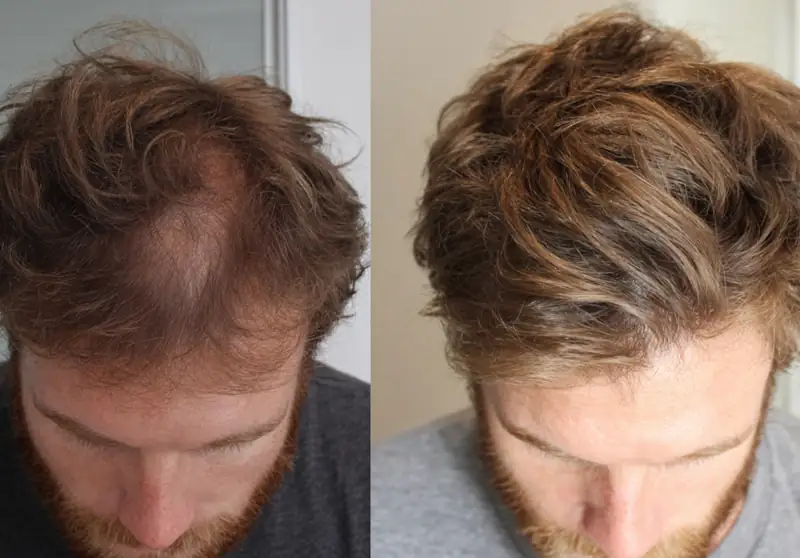
The Wnt/β-catenin activation and follicle stem cell reactivation that stem cell therapy provides can produce new visible hair growth in areas that appeared uniformly thinning — not transplanted hair, but regenerated growth from the patient's own dormant follicles. This new growth typically appears at months 2–4 as reactivated follicles complete their first new anagen cycle.
4. Long-Term Results Without Continuous Medication
Unlike finasteride and minoxidil — which must be taken indefinitely to maintain effects — stem cell therapy produces tissue-level changes (angiogenesis, reduced perifollicular fibrosis, restored vascular density) that persist considerably longer than the treatment session. Published pilot studies show maintained improvements at 12–18 months. Maintenance sessions every 12–18 months sustain rather than restart the biological foundation.
5. Improved Scalp Health and Microenvironment
The scalp itself benefits from MSC therapy's anti-inflammatory and tissue-repair effects — independent of hair growth outcomes. Improved scalp condition (reduced inflammation, better barrier function, reduced seborrheic activity) creates a more favorable environment for sustained hair health long-term.
6. Enhanced Hair Transplant Outcomes
When MSC therapy is used perioperatively with hair transplant surgery, it improves graft survival rates and accelerates anagen onset in transplanted follicles. The anti-inflammatory and angiogenic effects protect both the transplanted grafts and the surrounding native follicles from the ischemic and inflammatory stress of surgery. This application of stem cell therapy is increasingly standard in advanced transplant centers.
7. No Surgical Recovery Required
Unlike hair transplant surgery — which involves surgical harvesting, graft placement, scabbing, and weeks of restricted activity — MSC scalp injection is a 60–90 minute outpatient procedure with 24–48 hours of mild scalp tenderness and no meaningful downtime. Most patients return to normal activity immediately.
8. Suitable for Both Men and Women
Hair transplant surgery is limited by available donor supply and is less suitable for diffuse female pattern hair loss where donor-area thinning is also present. MSC therapy has no donor supply limitation — it works with existing follicles throughout the scalp — and is equally applicable to the diffuse thinning pattern more common in women.
9. Synergistic with Other Regenerative Modalities
Stem cell therapy composes exceptionally well with other regenerative hair modalities — PRP, exosomes, microneedling, peptides — producing multi-mechanism effects that exceed any single approach. The 2027 combination protocols at advanced clinics layer these modalities for significantly stronger outcomes than MSC alone.
Stem Cells vs Traditional Hair Treatments
Stem Cells vs PRP
Every plan is personalized. Message us on WhatsApp and we'll send your quote after reviewing your case.
Clinical note: PRP and MSC therapy are complementary — PRP's immediate growth factor delivery pairs well with MSC's deeper tissue-level regenerative effects. The most effective protocols in 2027 combine both, using PRP as the local delivery vehicle alongside MSC injection.
Stem Cells vs Hair Transplants
Every plan is personalized. Message us on WhatsApp and we'll send your quote after reviewing your case.
Clinical note: For advanced hair loss where large follicle populations have been permanently lost, transplant surgery may be needed to restore coverage — with MSC therapy used to improve transplant outcomes and protect remaining native follicles. For early-to-moderate loss where the majority of follicles are miniaturized but surviving, MSC therapy can often produce meaningful improvement without surgery.
Procedure: What to Expect
Consultation
A thorough pre-treatment assessment determines candidacy and informs protocol design:
- Trichoscopy — evaluates follicle density, miniaturization grade, scalp condition
- Phototrichogram — quantitative baseline hair count for objective outcome measurement
- Medical history and current medications review
- Discussion of treatment goals and realistic expectations specific to degree and type of hair loss
Treatment Session
Step 1: Scalp preparation — topical anesthetic cream applied 45–60 minutes before injection; scalp cleansed and prepared
Step 2: Cell preparation — MSCs processed to appropriate concentration and viability for injection; in combination protocols, PRP processed simultaneously from patient blood draw
Step 3: Optional microneedling — in some protocols, microneedling is performed first to create micro-channels for enhanced penetration and to trigger wound-healing signaling that synergizes with cell therapy
Step 4: MSC scalp injection — multiple small-volume injections distributed across the treatment area; fine-gauge needles used to minimize discomfort; PRP may be administered simultaneously through the same injection points
Step 5: Exosome application — concentrated exosome solution applied topically with microneedling penetration in protocols using exosome combination
Total duration: 60–90 minutes. Outpatient — no admission required.
Recovery Timeline
- Days 1–3: Mild scalp tenderness, possible minor redness and swelling at injection sites; manageable with standard analgesics if needed; normal activity from day 1
- Weeks 2–4: Shedding reduction often first noticed; scalp condition improvements begin
- Months 2–3: New hair emergence in thinning areas; early density improvement measurable by trichoscopy
- Months 4–6: Full first treatment cycle results — thicker shafts, improved density, better overall coverage
- Months 12–18: Maintenance session typically recommended to sustain biological foundation
Safety, Risks, and Considerations
What the Science Says
The safety profile of scalp MSC injection is well-established across published studies and clinical use:
- Common, transient: Mild injection site redness, swelling, and tenderness — universal; resolving within 24–72 hours
- Occasional: Minor bruising at injection points — resolving within a week
- Rare: Temporary shedding increase (telogen effluvium triggered by treatment stimulus) — self-resolving within 4–8 weeks and typically followed by stronger regrowth
- Very rare: Infection risk — minimized to negligible levels with proper sterile technique
No serious systemic adverse events have been reported in published clinical trials of scalp MSC administration. The intracranial and systemic exposure from scalp injection is negligible — the cells remain in the scalp tissue.
The key safety determinants are physician expertise, cell processing quality, and sterile technique — not inherent risks of the therapy itself in properly conducted settings.
Cost and Availability in 2027
Global Pricing Trends
Every plan is personalized. Message us on WhatsApp and we'll send your quote after reviewing your case.
The cost differential between the US and Medellín — 60–75% savings for equivalent or superior quality — makes comprehensive stem cell hair therapy protocols financially accessible in Medellín in a way they are not in North American markets.
At YouMedicine in Medellín, hair restoration programs integrate MSC injection with exosomes, PRP, and peptide protocols into structured treatment packages — with comprehensive medical tourism support for international visitors including telemedicine follow-up, maintenance protocol management, and accommodation coordination.
FAQs About Stem Cells for Hair Growth in 2027
Do stem cells really regrow hair?
Yes — with appropriate qualification. In patients with miniaturized but not permanently destroyed follicles (the majority of androgenetic alopecia patients in early-to-moderate stages), MSC therapy can reactivate dormant follicles and produce visible new growth. Responding patients in published studies show measurable improvements in hair count, density, and shaft diameter. Response rates and magnitude vary by individual biology, degree of loss, and protocol quality.
How long do results last?
Significantly longer than pharmaceutical treatments — published pilot studies show maintained improvement at 12–18 months. Annual or biannual maintenance sessions sustain the results.
Is the treatment painful?
Minimal. Topical anesthesia applied before injection makes the procedure well-tolerated by most patients — comparable to PRP scalp injection, which patients typically describe as manageable.
When will I see results?
Shedding reduction often begins at 3–6 weeks. New hair emergence typically appears at months 2–3. Full results of an initial session develop at months 4–6.
Is it better than a transplant?
For early-to-moderate hair loss, stem cell therapy can produce meaningful improvement with less invasiveness, no recovery period, and continued benefit to existing follicles rather than purely redistributing them. For advanced loss with significant permanent follicle destruction, transplant surgery may be needed for coverage restoration — ideally combined with MSC therapy for better outcomes and native follicle protection.
Where can I learn more about the evidence?
The International Society of Hair Restoration Surgery and Journal of Investigative Dermatology publish current research on regenerative hair restoration, including stem cell and exosome therapies.
Conclusion
Stem cell therapy for hair growth in 2027 has matured from an experimental curiosity into a clinically serious option with improving evidence, better protocols, and clear mechanisms — representing the most biologically sophisticated approach to hair loss currently available outside of research settings.
It is not a replacement for every conventional approach: severe advanced loss may still require transplant surgery, and pharmaceutical maintenance may remain appropriate for many patients. But for the large population seeking a biologically grounded alternative or complement to long-term medication use — one that addresses the causes of hair loss rather than managing its symptoms — stem cell therapy in Medellín offers genuine promise at accessible cost.
At YouMedicine, our hair restoration programs are designed within the context of comprehensive regenerative medicine — recognizing that scalp health is connected to systemic inflammation, vascular health, and hormonal balance, and treating it accordingly with individualized combination protocols.
Contact us at wellness@youmedicine.co or via WhatsApp at +57 324 576 1913 to schedule your consultation.
Your wellness starts with YOU.